How do you start trading memecoins as a beginner without getting wiped out?
Want articles like this for your own video to promote it on YouTube and Google? Order them through the Telegram bot @sat_sit_bot. Articles with your video embedded are written and posted by the bot itself — on popular topical sites (no ads). Free trial — 50 articles.
· based on the channel TJR
Key takeaways
- Memecoins are the highest-risk corner of crypto: most new tokens go to zero, and the majority of retail day traders lose money over time.
- The practical beginner stack is a self-custody wallet (Phantom, Backpack or Solflare), a swap or aggregator like Jupiter, and a burner wallet funded with a small fixed budget.
- Traders in the TJR breakdown route execution through Fomo (https://fomo.family/r/tjr) and Axiom (https://axiom.trade/@tjrtrader), with j7tracker.io and cielo.finance for wallet and social tracking.
- Sizing rules matter more than entry timing: many beginners cap each trade at 1-2% of their trading bankroll and cut losers fast instead of averaging down.
- Red flags for a likely rug pull include unlocked liquidity, one wallet holding most of the supply, a brand-new social account and a token that only exists because of a viral post.
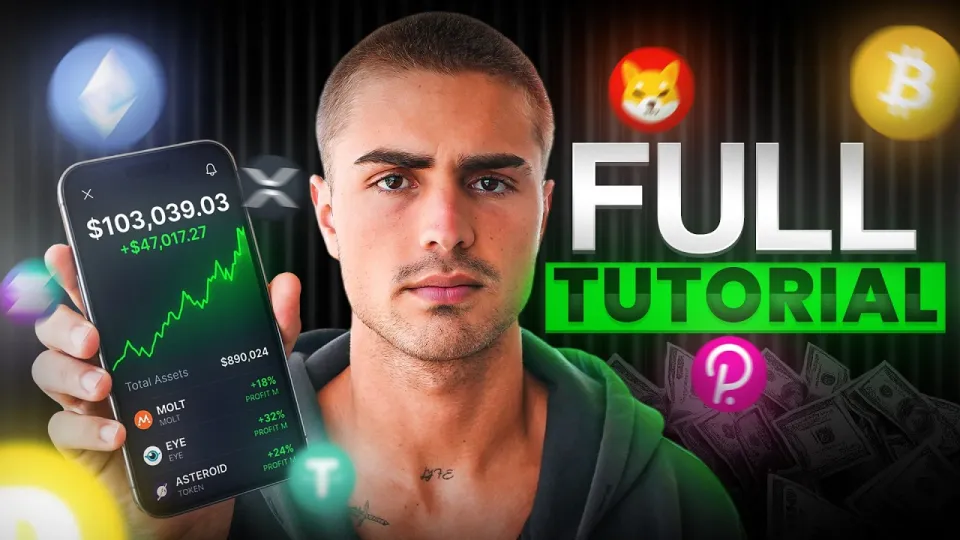
Memecoin trading for beginners means buying and selling highly speculative tokens on chains such as Solana and Base, usually within minutes or hours of launch, and the honest starting point is this: it is possible to begin with a small budget and a self-custody wallet, but it is not a reliable income strategy. Most new tokens lose nearly all their value, most retail day traders lose money, and the realistic goal for a first month is to learn execution, risk control and on-chain reading without blowing up your account. If you want to follow the same workflow shown in TJR's beginner walkthrough, you can register and get 10% off fees through Fomo before you place your first trade.
What trading memecoins actually involves for a beginner
Memecoins are tokens with no cash flow, no product and no legal claim on anything; their price is driven almost entirely by attention, liquidity and the behaviour of a small number of large holders. That single fact explains most of what happens to a beginner's money. When you buy a memecoin you are not investing in a business, you are taking a position in a live social experiment where the people who bought earlier and cheaper are your counterparties.
The mechanics are simple, which is exactly why so many people start here. You create a wallet, fund it with SOL or ETH, connect to a swap interface, paste a contract address, choose a size and confirm. The hard parts are everything around that: choosing which token, choosing how much, knowing when to sell, and recognising the moment a token is being dumped on you. A beginner who masters risk control but picks mediocre tokens usually survives longer than one who picks one great token and bets the whole account on it.
Setting up a wallet and a funded trading budget
Your setup should take twenty minutes and cost you nothing beyond the money you deliberately decide to risk. A clean beginner stack looks like this:
- Install a self-custody wallet such as Phantom, Backpack or Solflare, and write the seed phrase on paper, never in a screenshot or cloud note.
- Create two wallets: a main wallet you use for holding, and a separate burner wallet you use for memecoin trades. Only the burner touches unknown contracts.
- Fund the burner with a fixed amount you are genuinely willing to lose, for example $100 to $300, and treat that as tuition rather than capital.
- Keep a small reserve of SOL or ETH for network fees and for the priority fees that speed up transactions when a token is moving fast.
- Test the whole loop once with a tiny trade: buy, check the position, sell, and confirm the money is back in your wallet before you do anything bigger.
That last step matters more than it sounds. Many beginners discover during their first panicked exit that they never checked how slippage, fees or a failed transaction behaves, and they lose money to mechanics rather than to the market.
Reading a token before you buy it
Before any purchase, spend sixty seconds checking four things, because most memecoin losses are avoidable at this stage. First, liquidity: how much money is actually in the pool, and is it locked or burned? A pool with a few thousand dollars of liquidity cannot absorb your sell order without crushing the price. Second, holder distribution: if one wallet or a handful of wallets hold a large share of supply, you are buying into a token where a single click can end the chart. Third, contract behaviour: check whether the token has a mint function, a freeze authority or a modification to the standard contract, since those are the levers used in a rug pull. Fourth, social footprint: a token whose entire story is one viral post, with an account created days ago and no history, is a lottery ticket rather than a trade.
Position sizing and exit rules that keep beginners alive
Survival in memecoin trading comes from arithmetic, not from prediction. A workable beginner framework is to risk no more than 1-2% of your trading bankroll on any single token, so that ten consecutive losses cost you roughly a fifth of the account instead of all of it. Decide your exit before you enter: some traders sell half the position when it doubles and let the rest run with a trailing stop, while others take a fixed target and leave. Either is fine; what fails is holding a losing position while telling yourself it will come back, which is how a small loss becomes a total one.
The other rule worth writing down is a daily stop. If you are down three trades in a row, close the laptop. Memecoin markets are driven by momentum and emotion, and a beginner trading to recover a loss is the most predictable source of profit for everyone else in the pool.
Tools traders use to track wallets and momentum
Execution and information are separate problems, and beginners usually underestimate the second one. On the execution side, TJR points viewers to Fomo at https://fomo.family/r/tjr for trading with a fee discount, and to Axiom at https://axiom.trade/@tjrtrader as an alternative terminal for on-chain trading. On the information side, the same breakdown recommends j7tracker.io for monitoring social accounts and the wallets behind them, and cielo.finance for following wallet activity and seeing what profitable addresses are buying and selling. Aggregators such as Jupiter on Solana do the same job for routing a swap across pools to get a better price.
A useful habit is to track a handful of wallets that have a real track record, and to watch what they do rather than what influencers say. Copy-trading every move blindly is not a strategy either, because you see the entry long after it happened and you rarely see the exit in time.
Common beginner doubts, answered honestly
The most frequent question from people starting out is whether consistent profitability is realistic. For the average retail participant, the evidence says no: day trading is a negative-sum game after fees, and the published disclaimers from trading educators themselves state that most day traders lose. A small minority with discipline, a tested process and enough capital to survive variance can do well, but nobody should plan their finances around becoming that minority.
A second recurring doubt is whether paid courses or chart-pattern strategies are the missing piece. Candlestick theory is not useless, but in memecoins the dominant variables are liquidity, holder concentration and timing, not elegant patterns. Many people who spend months on theory and still lose money are simply trading instruments where the edge is elsewhere. A third theme in beginner discussions is trust: when a creator is simultaneously promoting a platform, trading on it and appearing in private group chats, viewers are right to ask what is being sold. Treat every recommendation, including the links in this article, as a tool to evaluate rather than a guarantee.
Useful links
- Fomo trading platform with 10% off fees: https://fomo.family/r/tjr
- Axiom on-chain trading terminal: https://axiom.trade/@tjrtrader
- j7tracker social and wallet tracker: https://j7tracker.io/
- Cielo wallet tracker: https://cielo.finance/
The bottom line on starting out
Starting to trade memecoins as a beginner is straightforward technically and brutal financially, and the difference between the two is discipline. Set up a burner wallet, fund it with money you can lose, learn to read liquidity and holder distribution before you buy, and size every position so that a loss is survivable. Use tools such as Fomo for execution and trackers for information, but verify claims yourself and never treat a creator's results as your expectations. The walkthrough that prompted this guide comes from the TJR channel, and it is worth watching as a demonstration of process rather than as a promise of profit. If you take one thing from it, take the risk rules, not the tickers.
Questions & answers
How much money do I need to start trading memecoins?
You can start with a very small amount, and you probably should. Many beginners fund a separate burner wallet with $100 to $300 and treat it as tuition, keeping the rest of their savings out of reach. The size of your first trades matters less than whether you can survive twenty of them without changing your lifestyle.
Why do so many beginners lose money on memecoins?
Most new tokens have no fundamentals and very thin liquidity, so price is driven by a few large holders who can exit faster than you can. Add fees, slippage and the tendency to hold losers while selling winners early, and the average retail result is negative. Trading educators themselves disclose that most day traders lose money.
Do I need paid courses or special chart strategies to start?
No. A wallet, a swap interface and a basic understanding of liquidity and holder concentration will get you further than most pattern courses. What paid material can help with is process and risk management, but it cannot remove the fact that memecoins are speculative instruments where most tokens go to zero.
Are tools like Fomo, Axiom, j7tracker and Cielo necessary?
They are conveniences, not requirements. Execution platforms such as Fomo and Axiom make buying and selling faster, while j7tracker.io and cielo.finance help you watch wallets and social activity. You can trade with a basic wallet and an aggregator alone, but tracking tools reduce the amount of guessing involved.
Source: How To Start Trading Memecoins As A Beginner In 2026 · Markdown version